
Indian wedding traditions are among the most beautiful and meaningful ceremonies in the world. These celebrations go far beyond a simple exchange of vows. Each ritual carries deep spiritual significance, connecting two souls, two families, and two destinies through ancient Vedic customs passed down through thousands of years.
Today, many couples plan an Indian wedding beyond their home country. Thailand has become a preferred destination, offering scenic settings and warm hospitality while respecting tradition. This guide explains the meaning behind an Indian wedding, outlines a Hindu wedding ceremony step by step, and explores why an Indian wedding in Thailand continues to attract couples from around the world.
Understand the History of Indian Wedding Traditions
Indian wedding traditions, rooted in ancient Vedic times, view marriage as a sacred, lifelong sacrament uniting two families, evolving from social necessity to joyous celebrations with rituals like Mehendi (henna), the groom’s celebratory Baraat, and the sacred Pheras (seven vows around fire), blending deep cultural symbolism with regional diversity and modern adaptations, emphasizing family, duty, prosperity, and spiritual.
Pre-Wedding Ceremonies: Building the Foundation
Indian wedding traditions begin days or even weeks before the main ceremony. These pre-wedding events prepare the couple spiritually and bring families together in joyful celebration.
Engagement Ceremony (Sagai)
The Sagai (or Roka/Mangni) is the official Indian engagement ceremony, a joyous first pre-wedding ritual where families exchange blessings, gifts, and jewelry, formally sealing the couple’s betrothal with traditions like applying tilak (vermilion mark) on the groom’s forehead, signifying the start of wedding festivities and welcoming each other into their families.
Haldi Ceremony
The Haldi ceremony is a vibrant Indian pre-wedding ritual where a turmeric (haldi) paste is applied to the bride and groom by family and friends for purification, good luck, and a natural glow before their wedding day, filled with yellow decor, traditional songs, dancing, and joyous bonding. It’s a fun, colorful event symbolizing blessings and warding off evil spirits.
Mehndi Ceremony
The Mehndi ceremony transforms the bride’s hands and feet into works of art. Skilled artists spend hours creating intricate henna designs filled with flowers, peacocks, and hidden symbols. According to tradition, the groom’s name hides somewhere in the design, and he must find his name on the wedding night.
The darker the mehndi stains, the deeper the love between bride and groom. This belief makes the ceremony both beautiful and meaningful. Female relatives join in the fun, getting their own hands decorated while celebrating together.
Step-by-Step: The Indian Wedding Day Rituals
Baraat: The Groom’s Grand Entrance
The groom arrives in style during the Baraat procession. Traditionally, he rides a decorated horse while his family and friends dance around him to the beat of dhol drums. Modern grooms might arrive in luxury cars, but the energy stays the same—pure celebration.
The bride’s mother welcomes him at the entrance, applying a tilak mark on his forehead and performing aarti to ward off evil. This warm welcome symbolizes the joining of two families.
The Mandap: Sacred Space
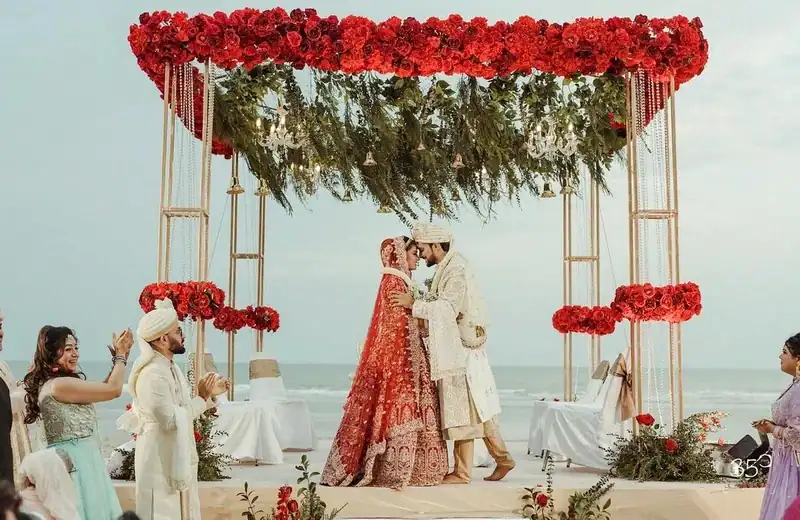
All main rituals happen under the Mandap, a four-pillared canopy decorated with flowers and fabric. The four pillars represent the four parents, four life goals (dharma, artha, kama, moksha), or four elements. This sacred structure creates a temple-like space for the ceremony.
Kanyadaan: Giving Away the Bride
Kanyadaan is one of the most emotional moments in the wedding ceremony. The bride’s father places her hand into the groom’s, symbolising trust and the responsibility of caring for her well-being. After this, the couple performs Panigrahana, where they hold hands to mark the start of their life together, built on commitment, partnership, and mutual support.
Vivaha Homa: The Sacred Fire and Saptapadi: The Seven Sacred Steps
Vivaha Homa is the priest who lights a sacred fire in a copper vessel, feeding flames with ghee and fragrant herbs. The couple offers rice and other items to Agni while reciting prayers. These offerings ask for purity, prosperity, and divine blessings on their marriage.
The Saptapadi follows the Vivaha Homa. The couple takes seven steps around the fire, each step representing a marital vow. These rituals symbolize the couple’s commitment to each other and their shared responsibilities.
The meaning of step represents a sacred vow:
- Nourishment and strength
- Health and energy
- Wealth and prosperity
- Happiness and harmony
- Children and family
- Long life together
- Friendship and understanding
Mangalsutra and Sindoor
The groom places a Mangalsutra (sacred necklace of black and gold beads) around his bride’s neck. He then applies sindoor (red vermillion powder) to the parting of her hair. These symbols mark her as a married woman and represent his devotion. The couple exchanges rings, completing their bond.
Post-Wedding Indian Traditions
Vidaai: The Emotional Farewell
The Vidaai marks one of the most emotional moments. The bride says goodbye to her family, tossing rice over her shoulder as she leaves. This rice symbolizes prosperity for her childhood home. Parents and siblings cry openly, mourning the loss of their daughter while celebrating her new journey.
Grihapravesha: Welcome Home
At the groom’s house, his family welcomes the bride with traditional rituals. She enters with her right foot first—a gesture bringing good luck. The bride might push over a container of rice with her foot, scattering grains everywhere. This act symbolizes abundance flowing into her new home.
The Celebration After Wedding: Food, Music, and Pure Joy
An indian wedding feast delights every sense. Hundreds or even thousands of guests enjoy elaborate vegetarian meals featuring regional specialties. Live music keeps energy high while guests dance late into the night. The celebration often spans multiple days, each filled with different events and rituals. Colors dominate everywhere—especially red, which symbolizes prosperity and fertility.
Modern Indian Weddings Around the World Including Thailand
Today, couples adapt Indian wedding traditions to global destinations. Thailand has emerged as a popular choice for hosting an Indian wedding abroad.
An Indian wedding in Thailand offers natural beauty, professional hospitality, and experienced planners familiar with Hindu wedding ceremonies. Beachfront venues, tropical gardens, and private resorts allow couples to honor tradition while enjoying a destination experience.
Thailand supports multi day celebrations, large family gatherings, and sacred rituals with ease. The country’s welcoming culture aligns naturally with the values of an Indian wedding.
Conclusion
Indian wedding traditions celebrate love, responsibility, and unity through meaningful rituals passed down across generations. Each step in a Hindu wedding ceremony holds purpose and spiritual value.
For couples planning an Indian wedding in Thailand, selecting the right setting matters. A calm coastal destination offers space, privacy, and comfort for families and guests. Hua Hin stands out for its relaxed atmosphere and refined hospitality.
Aviyana Hua Hin provides a serene backdrop suited for hosting wedding guests and related celebrations. Its peaceful setting, spacious accommodations, and attentive service align naturally with the needs of Indian wedding events. For couples seeking balance between tradition and destination elegance, Aviyana Hua Hin offers a thoughtful place to begin this new chapter together.